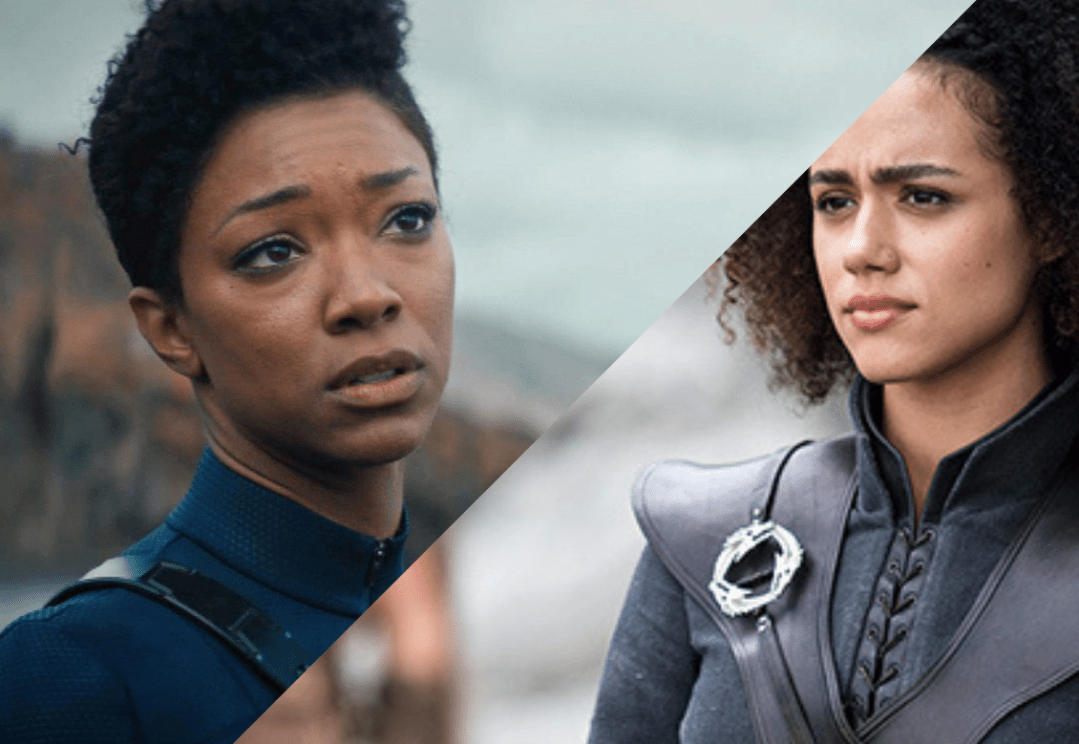
If you follow me on twitter you know I have an ongoing joke about Black Girls in Sci-Fi/Fantasy being my favourite genre that I bring up whenever I see a casting announcement on Variety or a trailer release… I thought it was time to talk about the impact seeing Black girls and women in these genres has had on me and the benefits and issues of our growing presence in Sci-Fi/Fantasy (and as an extension, the growing superhero genre).
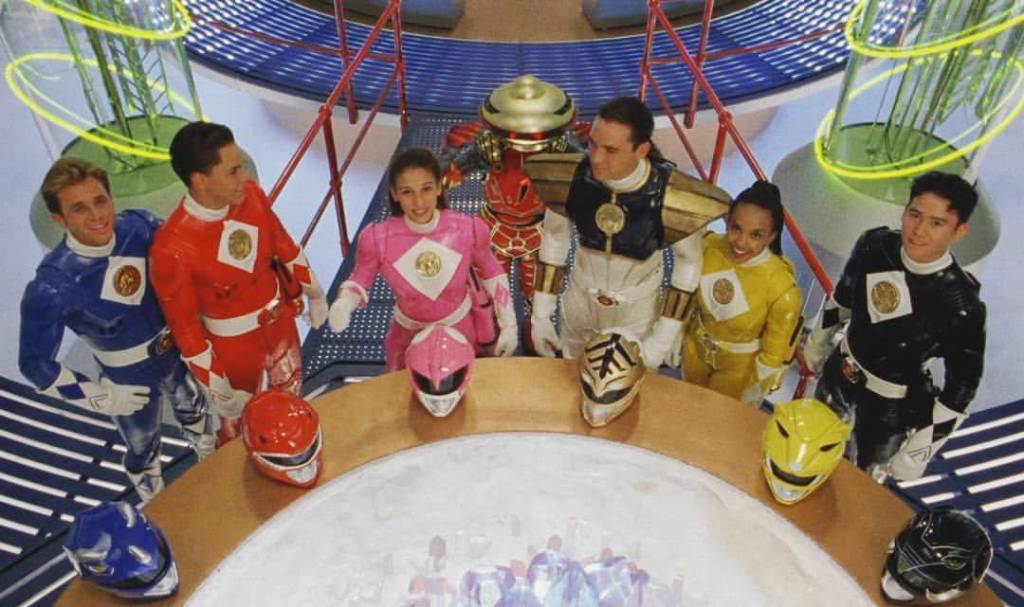
Growing up watching these movies and shows, the characters were predominantly White and I honestly never really took notice of it because without realising it, I had accepted White as the default to an extent that even when there were Black characters, they were never my favourites. As I got older I realised much of this was caused by the poor characterisation and character development of Black characters. As a child I was obsessed with ‘Mighty Morphin Power Rangers’, but watching it as an adult I can see its many issues. The black ranger (played by Walter Jones) was riddled with stereotypes. He literally used to break dance as part of his fighting style (the actor actually coined the fight style as “Hip Hop Kido”). Despite this issue of playing on stereotypes, his character was always portrayed as cool and all the little Black boys (and some non Black boys) wanted to be him. Trini’s character was the cool sabre tooth tiger and when she was the yellow ranger I had no issue playing her during our lunchtime battles because much like Jones, she was also allowed the space to be fun and cool (hindsight however reveals how steeped in East Asian stereotypes she also was) but when the yellow ranger became a Black actress this quickly changed. I was adamant whenever I was asked to play her that I wanted to be the pink ranger played by White actress Amy Jo Johnson instead. Aisha Campbell, played by Black actress Karan Ashley, was brought in later on the series to replace Trini (played by Thuy Trang) and in her time in the role she was never really fleshed out as a character. Instead of being excited and proud of seeing a girl that looked like me on my favourite show I felt nothing. I didn’t hate her but I also didn’t like her, she was just there.
Reading ‘Children of Blood and Bone’ this year was everything my young Blerd (Black Nerd) heart desired and deserved as a child, fully fleshed out Black characters who were the stars in their own adventures. Zélie and her crew are a magical group of Black Nigerian children who get to go on magical adventures, battle evils, and say ‘spells’. Many people refer to this book as an African ‘Harry Potter’ and to an extent I agree, not just because of the magical content but mostly because of how wondrous and larger than life these characters are allowed to be. Zélie is to me what Hermoine was to most of the girls I grew up with. However, even in all that magic, the more cynical part of me could argue that the plotline exploring the divide between the Majie and the humans could be likened to racism and how even in a continent and country largely populated by Black people, we are still subjected to the effects of racism even in fantasy. Reading the book also made me take a moment to think “Wow, Black girls and women are finally making waves in these genres”. But despite how much I enjoyed this book, it is clear there are still limitations and issues with the representation of us in these genres and as we see our presence increase I wanted to weigh in on what new trends I have noticed and the issues they present.
Positives of the growing presence
The world’s current favourite buzzword is representation. We talk about the need for it and how the media we consume and the people it spotlights should be a reflection of the world we exist in. Seeing yourself in the media and the way in which you are portrayed have both a direct and indirect impact on the value we place on ourselves. Our growing presence in these genres is an extension of the pursuit of representation.
These genres allow for you to reach beyond the constraints of reality and including Black girls and allowing them to be whimsical is in itself revolutionary as so much of the media, both fiction and non-fiction, regarding our existence seems to only spotlight our trauma. It is beautiful to see us have the space to be as magical to the world as we have always regarded ourselves to be. When I first watched ‘A Wrinkle in Time’ I was in awe of Storm Reid’s portrayal of Meg, in parts because Reid is an incredible actress (she is the moment) but also because she had the space to just be and it quickly became one of my favourite movies. Now I am very aware that I willfully ignored the many issues with the film when I first watched it but seeing a young Black girl in the leading role of such a huge project and being able to share that with my niece was incredibly special. These genres also show the flip side of being ‘other’; typically what makes us other (our Blackness and our womanhood) is what we are constantly abused and berated for, but in these worlds what makes you other makes you special, makes you chosen.
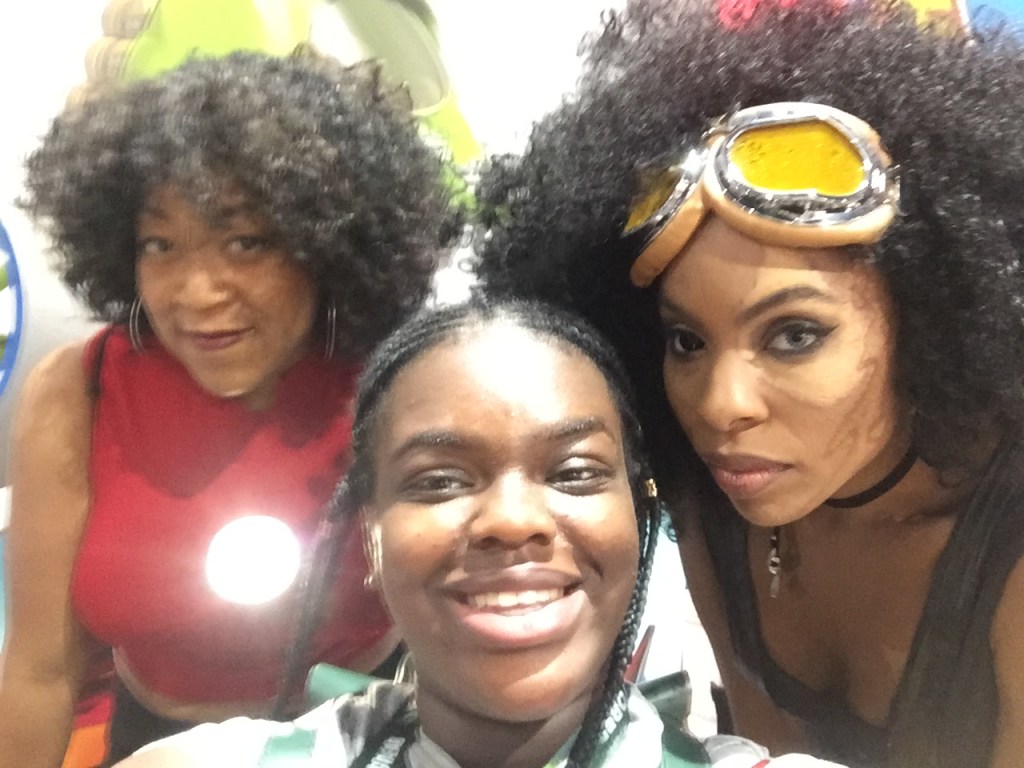
Being a Blerd girl growing up there is a sense of shame or embarrassment in having interest in these genres that have been historically categorised as being reserved only for White men. You are criticised by Black people and women for having ‘White’ and ‘boy’ interests but what is most impactful is the way that we are denied access to the community of lovers of these genres by its White gatekeepers. The vitriol experienced by us online is ongoing and extremely invalidating. Take a moment to look at the replies of any Black women who cosplay (especially those who do racebent cosplay) and you would be disgusted at the racist and misogynistic abuse these cosplayers experience. Our presence as actors and characters in these genres validates our access to this space: you can tell us we don’t belong in these spaces all you want, but women like Tati Gabrielle playing Prudence – a powerful Black witch with finger waves on Netflix’s ‘Chilling Adventures of Sabrina’ – challenge that. I remember going to San Diego Comic Con in 2018 and seeing two Black women cosplaying as IronHeart and Domino and feeling so full and seen (and also instantly asking them for a picture). Their presence let me know that although the exhibition floor was full of White men, I still belonged.
Negatives of the Growing Presence
Take Sonequa Martin-Green in ‘Star Trek: Discovery’ for example. She is the best example of the type of representation Black women deserve. She plays Michael Burnham, a female scientist, and is the lead in a major Sci-Fi franchise. However, most Black actors in these genres are not afforded the same juicy content to sink their teeth into. Like I mentioned earlier regarding the yellow ranger in Power Rangers, representation is meaningless if the faces we see invoke no excitement from us or are poor representations of Black women as a group. The issue that occurs constantly is when tokenism is miscategorised as representation. On many occasions we are finally put in places where we always deserved to be, but what we are given is lacklustre. It allows gatekeepers to use this poor representation as a means to justify why we do not belong in these spaces. These undeveloped filler characters most times are a ploy to make us go to the movies or watch shows and contribute financially to its success only for us to be pushed aside. This also occurs when representation is prompted as a response to criticism eg. Missandei played by Nathalie Emmanuel in Game of Thrones. It poses the question “Do you care about us or do you only care about our viewership?”. There was already an issue with her character’s story beginning as a slave but her arc ending up with her in chains and right back in that position was incredibly disrespectful to the Black audience who had waited for so long to feel seen in a show they loved so much.
Colourism is also a subject that rears its ugly head in most areas and it is no exception here. Our growing presence in these spaces is often characterised by lighter skinned (more often than not mixed race) Black women. Black women are not a monolith and by allowing us into these spaces but only under these criteria, gatekeepers invalidate the spectrum we represent. Think of every Sci-Fi and Fantasy show and book you have watched in the last 5 years: how many of the Black women featured were of darker complexion or even of mid tone? The clearest example of this pattern is the ongoing miscasting of X-Men mutant Storm. Storm in the comics was designed as an African superhero whose white hair contrasted starkly with her dark skin, yet every live action iteration of the character has been played by a mixed race woman. When I was younger I was very confused as to why Halle Berry was playing the character. I had watched the cartoon religiously growing up and this lady looked nothing like the badass mutant I had grown to adore. Her presence took one of the few well written characters in the genre that looked like me and removed my ability to relate to her. Did Berry look more like me than the actor playing Jean Grey? Yes, but proximity is not the same as representation. To add insult to injury, when ‘X-Men: Apocalypse’ was created they were given a second chance to give us the Storm we deserved and requested in the form of young Storm, that was until the shortlist was revealed and was filled once again with mixed race actors. The role would eventually go to Alexandra Shipp who, when questioned about the issue, refused to acknowledge the issue of colourism and the impact of the decision to cast her. “We’re not going to have this conversation about a cartoon character. You’re not going to tell me that my skin color doesn’t match a Crayola from 1970”. On top of all of that, her character ended up being pushed to the side anyway, and when she was given her few moments on screen her performance was awful (so much audacity, so little talent).
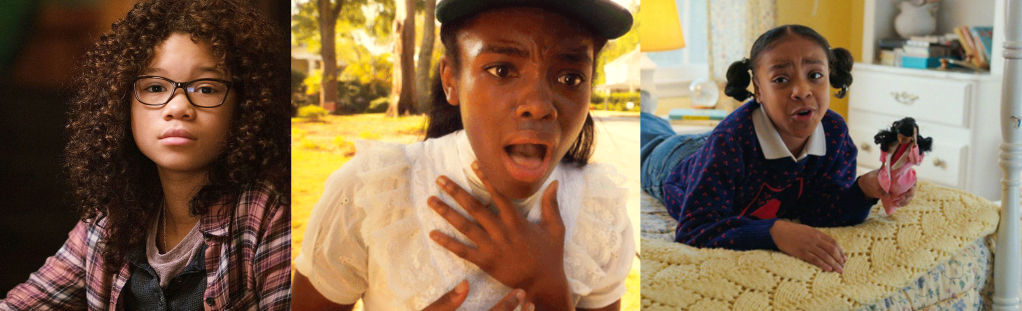
There is also a clear distinction between the type of stories the few darker skinned actresses get to play in comparison to lighter skinned counterparts. Let’s look at ‘Lovecraft Country’s’ Dee, played by the incomparable Jada Harris. I am very aware that context matters and although this show has magic elements and can be considered a part of the Fantasy genre it is generally regarded as a Horror, but it is interesting to see where her character goes from at the beginning of the series; a care free young girl with a passion for drawing and comic books, to (spoiler alert) a murderer by the final episode. Her designated episode was also extremely difficult to watch and actually took me over a week to get through (it should also be noted that I am a self professed scaredy cat), it was so entrenched in the trauma experienced by young Black girls and the creators even talked about how it represented how often young Black children become forgotten in the midst of other duress. It poses the question, would Harris ever have been given the opportunity to play a gentle and more timid character like ‘A Wrinkle in Time’s’ Meg? Black girls also end up falling into the same tired sassy, finger snapping, eye rolling stereotypes that we see commonly in drama and comedy even in these genres. A clear example of this is Priah Nicole Ferguson’s character Erica Sinclair in ‘Stranger Things’. Until the most recent season when she finally got a piece of the action (largely due to public outcry to see more of her), her role was largely a compilation of mean quips towards her brother and his friends for comic relief. If they are not sassy, they are stern. Even though I have recognised her as one the best current examples of good representation in these genres, even Sonequa Martin-Green’s Michael Burnham falls into this and it is justified by her character’s childhood training under the Vulcans.
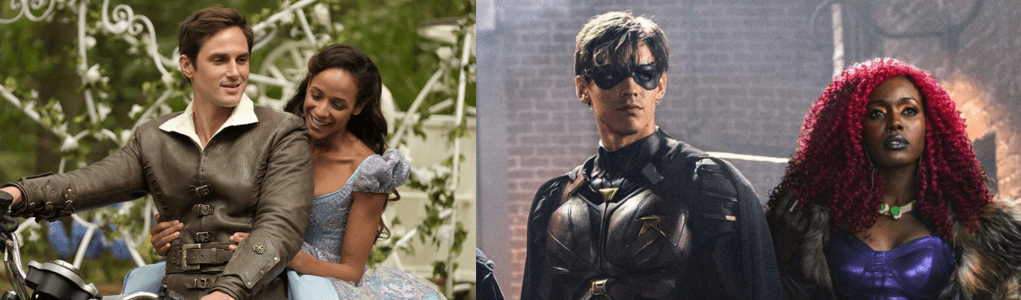
Brenton Thwaites as Dick ‘Robin’ Grayson & Anna Diop as Kory ‘Starfire’ Anders
A trend I’ve noticed that occurs a lot in these genres especially when there’s a race bent character is that Black women are almost always paired with White men, and although I am very aware that interracial couples exist they are densely overreperesented in these genres and it has made me realise some key issues. The mean or moody Black girl and her much nicer White love interest. Think about it… MJ and Peter Parker in ‘Spider-man: Far From Home’, Iris West and Barry Allen in CW’s ‘Flash’ and Henry and Ella/Jacinda in Netflix’s ‘Once Upon a Time’. Even when the man is also more stern the woman still isn’t afforded the space to be the happy-go-lucky partner, they are just both stern until their affection for each other softens them e.g. Starfire and Robin in ‘Titans’. These characters are all wonderful and are characterised by their strength, but it once again plays into the stereotype of Black women having attitudes and being unapproachable, it continues to portray us as indestructible and doesn’t allow us the space to be soft and timid. By pairing these Black women with White men it gives us the impression that they need these White counterparts to be palatable to the audience and it is exactly the same as being relegated to the role of the White lead’s best friend. They may have their standout moment but it is just that, a moment, and that moment is almost always in support or defense of their White romantic lead.
It is clear that we are here but we still have not really arrived, at least in a way that is truly meaningful. It is more than likely that the newest Sci-Fi or Fantasy project on Netflix or at your nearest cinema will feature a Black actress but she will be one or more of these three things; lighter skinned/mixed race, presented as mean and stern, or be relegated to an under-developed supporting character who is there to amplify or support her White best friend lead, or a White love interest. As I have already said, our presence in these genres is important both to Black women who want to feel represented and validated in a genre they are interested in but also as a means of showing Black women as a spectrum. What we need to challenge is the very narrow narratives that have been imposed upon us in these genres in order to give us meaningful stories. The difference between what we currently have and desire for the future is understanding the distinction between representation and inclusion. We no longer want to just fill quotas (which is a reason I am very wary of the new Academy eligibility guidelines) but want to be included as characters contributing to full and layered storytelling. As our visibility continues to grow I hope we can achieve this, but most importantly, I hope the future allows for us to become the story’s protagonists rather than constantly playing second fiddle to White leads.

 Small, Silver and Hardback