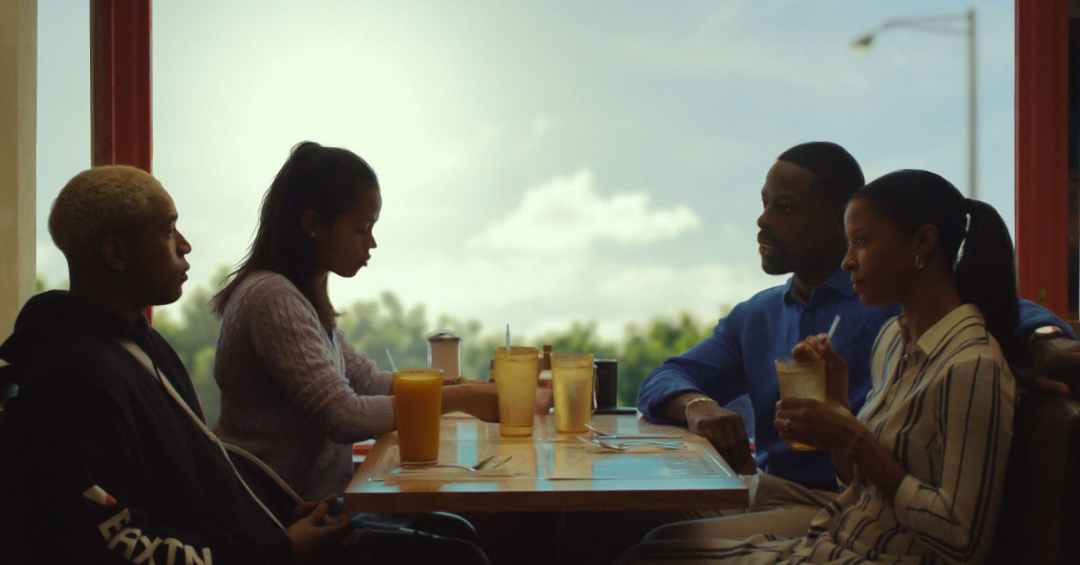
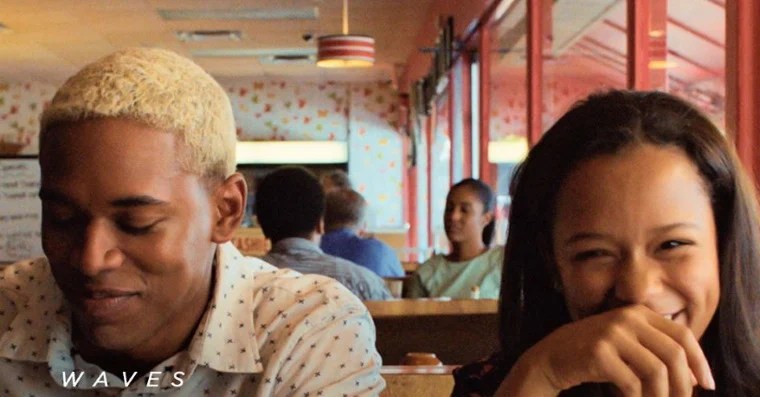
Much of my movie viewing experience is spent criticising aspects ‘that added nothing to the story’ or ‘that really needed to be fleshed out’’. After my rewrite of ‘Spider-man: No Way Home’ I decided to create a series that allowed me to further explore this. ‘On the Cutting Room Floor’ is a series where I look at different movies and discuss what I think would have helped better round out these stories. So naturally, I thought the perfect starting point would be a movie I have relentlessly criticised: ‘Waves’ dir. Trey Edward Shults.
Now I like to stare at Kelvin Harrison Jr and Sterling K.Brown for two hours as much as the next person, but I remain steadfast in my opinion that one of this film’s main issues is its hyperfixation with style over substance. Outside of the fantastic performances of the aforementioned actors, it feels very music video for an indie artist’s lead single. Rather than the direction, cinematography and music supervision serving to elevate the story it instead cast a glaring spotlight on the film’s many weaknesses.
My main criticism and the focal point of this segment is the very strange series of choices made in the neverending third act. We spent the entire film laser-focused on Tyler (Kelvin); his difficult romance with Alexis (Alexa Demie), his highschool wrestling career, and the tumultuous relationship he has with his father (Sterling). Then we are suddenly thrust into a completely different story after he (spoiler alert) commits manslaughter against his girlfriend. For some reason after we are delivered the verdict of trial, which to me is positioned as the tragic ending to the story, the story pivots to being about the effect of the fallout of Tyler’s crime on his younger sister Emily (Taylor Russell). Now in the context of the story this could have been a really compelling way to continue the story, however, there are too many factors in the first two acts that fail her story.
Alternative 1: Kevin’s Story
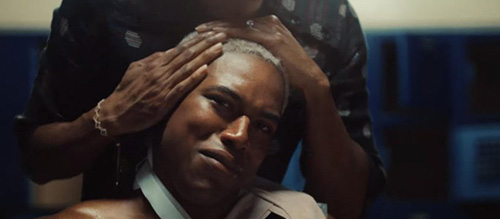
Shults could have (and I would have preferred it) ended the film at the point of the verdict. Now I understand it would have made for a very short film if they just cut out the entire third act completely, but I think the time used in the third act of the film would have been better served helping bolster the storytelling in the second act. The areas that could have been fleshed out further included Tyler’s dynamic with his family, his partner, and the pressures of his athletic aspirations. The aftermath of his partner revealing the big news of the film to him felt very rushed, there was no real build up to the climax of his story as a result and I feel it really was a disservice to his story and to Harrison as an actor because he did such a great job in his and Demie’s final scene together and it would have had a greater impact if he was given more to chew on.
Alternative 2: Emily’s Story

However, if Shults was insistent on ending with a story focused on Emily’s life post-Tyler’s verdict he needed to do significantly more to make us as an audience care about what was next for her. Emily (Russell) was essentially missing from the first two-thirds of the story and very much relegated to background noise in the family, and when the third act suddenly decides to focus on her it feels very random and the audience feels uninvested in her story and her romance with Luke (Lucas Hedges). On a personal, more picky note, I’m not particularly a big fan of Hedges (why are you booing me, I’m right?) so I admit that may have impacted how I feel about Emily’s story. Her entire story seems to be a by-product of the actions of her brother which she briefly talks about to her father – the impact it had on her life and on her subsequent happiness. However, because the story doesn’t do a good job of making us care for her before his crime, the criticism falls flat because we know nothing of her before his actions. In order to make this third act work we need to know much earlier who she is outside of her brother. What were her interests? What were her academic pursuits? Before the verdict of Act 2 who was she? Who is she outside of Tyler? Who is she outside of her boyfriend? I’m not asking for her to suddenly be the loud outlandish family member, in fact I want her to still remain quiet and reserved, but showing the impact Tyler’s spotlight in the family has on her throughout the story would’ve highlighted how even in his absence, his presence is still a shadow over her life.
If Shults wanted to tell a story about how we are sometimes relegated to the worst decisions we have made, rather than a sum of our parts the story should have ended with Tyler. If he instead wanted to portray the impact patriarchy in the nuclear family has on daughters, he needed to spend more time early on honing in on this message. Either alternative would have made for a better story and would have given the backbone it needed to elevate beyond just its beauty.
When discussing this film with T she also presented the idea that the story could have taken this notion further, making an interesting commentary on Black families. Black daughters are often relegated to second class citizens and positioned as second mothers/wives to the men in their families. A similar pattern is seen in the Black community as a whole, with the struggles of Black women taking a back-seat to those of Black men; you only need to look at the BLM movement and which figures who were victim of Police violence are focused on, or even how the movement has never really touched on violence against Black women at the hands of the medical system. Shults as a White director doesn’t really have the range to express this in a fully realised way and most likely didn’t even realise his story was touching the hem of this discussion. The reality is not only would the story have benefited from the aforementioned changes to the script, it would have also significantly benefited from a Black woman as a writer (or co-writer). It once again illuminates the need for more people working behind the scenes who look like the characters portrayed on screen in the handling of their stories.

 Small, Silver and Hardback