Pop Culture Medicine is a segment that looks at representations of the medical field in media. Today’s Topic: Eating Disorders.
Please be aware that this piece discusses eating disorders and media depicting them in great depth so be wary of potentially triggering content. Look after yourselves.
Eating Disorder
/ˈiːtɪŋ dɪsɔːdə(r)/
Noun
- an emotional disorder that causes eating habits that are not normal, for example anorexia (Oxford Learner’s Dictionaries)
- any of several psychological disorders (such as anorexia nervosa or bulimia) characterised by serious disturbances of eating behaviour (Merriam-Webster)
The earliest cases of eating disorders recorded were by English physician Richard Morton in 1689 in which he described cases of “nervous consumption” in a girl and a boy for whom he could not explain their loss of appetite and loss of weight by a physical cause. Despite the first documented case dating back a few centuries, and eating disorders themselves having likely been around for longer, it was not until the late 1800s that Anorexia Nervosa (a type of eating disorder) was accepted as a psychological disorder.
Today, eating disorders are characterised within the field of psychiatry as conditions where there are abnormal eating behaviours as well as a general preoccupation with food, body weight and shape. Eating disorders have now been further broken down into multiple disorders rather than just Anorexia Nervosa, with others including Bulimia Nervosa, Binge-Eating Disorder and more now being included in the DSM-V and ICD-11 with specific diagnostic criteria outlined within these manuals; and for other disordered eating that don’t clearly fit these outlined criteria but can be recognised as being pathological (meaning they cause significant distress and impact the person socially, physically and in other areas of life/general functioning), they have other classifications for these “atypical” presentations. In terms of proportion of diagnoses, Anorexia and Bulimia Nervosa remain the most common thus I am choosing to focus primarily on those but I wanted to stress that eating disorders encompass a lot of disorders defined by specific behaviours and symptoms.
| DSM-V diagnostic criteria for Anorexia Nervosa | ICD-11 diagnostic criteria for Anorexia Nervosa |
| A. Restriction of energy intake relative to requirements, leading to a significant low body weight in the context of age, sex, developmental trajectory, and physical health B. Intense fear of gaining weight or becoming fat or persistent behaviour that interferes with weight gain C. Disturbed by one’s body weight or shape, self-worth influenced by body weight or shape, or persistent lack of recognition of seriousness of low bodyweight | A. Significantly low body weight for the individual’s height, age, developmental stage and weight history that is not due to the unavailability of food and is not better accounted for by another medical condition B. A persistent pattern of restrictive eating or other behaviours that are aimed at establishing or maintaining abnormally low body weight, typically associated with extreme fear of weight gain. C. Low body weight is overvalued and central to the person’s self-evaluation, or the person’s body weight or shape is inaccurately perceived to be normal or even excessive |
Anorexia Nervosa diagnostic criteria
Table summarising the DSM and ICD up-to-date diagnostic criteria of Anorexia Nervosa
| DSM-V diagnostic criteria for Bulimia Nervosa | ICD-11 diagnostic criteria for Bulimia Nervosa |
| A. Recurrent episodes of binge eating, an episode is characterised by: -Eating, in a discrete period of time (e.g. within any 2-hour period), an amount of food that is definitely larger than what most individuals would eat in a similar period of time under similar circumstances -A sense of lack of control over eating during the episode (e.g. a feeding that one cannot stop eating or control what or how much one is eating) B. Recurrent inappropriate compensatory behaviour in order to prevent weight gain, such as self-induced vomiting; misuse of laxatives; diuretics or other medications; fasting or excessive exercise C. The binge eating and inappropriate compensatory behaviours both occur, on average, at least once a week for 3 months D. Self-evaluation is unduly influenced by body shape and weight E. The disturbance does not occur exclusively during episodes of anorexia nervosa | A. Frequent, recurrent episodes of binge eating (e.g., once a week or more over a period of at least 1 month). Binge eating is defined as a distinct period of time during which the individual experiences a loss of control over his or her eating behaviour B. Repeated inappropriate compensatory behaviours to prevent weight gain (e.g., once a week or more over a period of at least 1 month) C. Excessive preoccupation with body weight and shape D. There is marked distress about the pattern of binge eating and inappropriate compensatory behaviour or significant impairment in personal, family, social, educational, occupational or other important areas of functioning E. The symptoms do not meet the definitional requirements for Anorexia Nervosa |
Bulimia Nervosa diagnostic criteria
Table summarising the DSM and ICD up-to-date diagnostic criteria for Bulimia Nervosa
I’ve alluded to this before in the last instalment of Pop Culture medicine I did in which I talked about addiction and its depiction on HBO’s ‘Euphoria’, but the way the general public views mental health when compared to physical health means it is not taken as seriously or in some cases is viewed as somehow being the fault of the person with the disease; largely due to a misunderstanding of these disorders and the extent of the harm they can cause. With the media having such a prominent role in our everyday lives where it is able to shape and inform the views, politics and beliefs of the public (to an extent), it can play a large role in shaping the way we view things– whether in a positive or detrimental way– and in educating viewers on issues they would not otherwise be exposed to. It’s the whole reason I started this “Pop culture medicine” series, to look at how the media depicts medical (physical and psychological) issues given that medicine is the field I am qualified in and work in.
With eating disorders, the way they are depicted within the media generally tends to fall into one of two categories, either comedic or dramatic, but both tend to be problematic and unhelpful in their own specific ways. In terms of the comedic portrayals, a lot of comedies commonly treat behaviours associated with disordered eating as a joke; think Cher’s obsession and preoccupation with eating and how she’d feel like throwing up after drinking two mochas in ‘Clueless’, the entire plotline around tricking Regina into eating those bars containing carbs (a nutrient essential to all biological processes in the body and to life, mind you) that cause her to gain weight in ‘Mean Girls’, or all the various comedies that have a throwaway joke/punchline involving a female character (because they’re always female, but more on that shortly) going to the bathroom to make themselves throw up, a clear purging behaviour which has been described in the diagnostic criteria above. The treatment of eating disorders as a joke or trope within media is one that was popular primarily in the 90s and early 2000s but it’s not completely gone, with recent sitcom ‘Modern Family’ regularly making jokes about eating disorders just as an example. In the medical community it is well understood that eating disorders are extremely dangerous, with Anorexia Nervosa in particular having the highest mortality rate of all psychiatric disorders. So when the media depicts eating disorders in such a joke-y manner, it makes light of just how serious eating disorders actually are which in turn impacts how people view them.
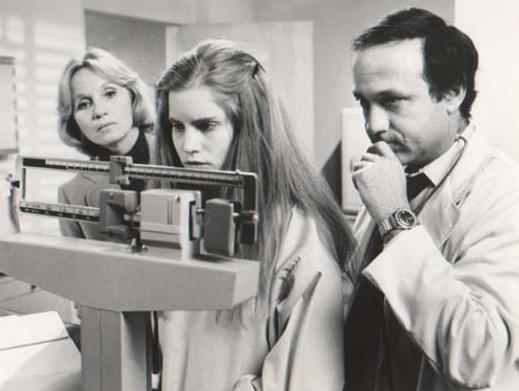
By contrast, other pieces of media going back as far as the 1981 film ‘The Best Little Girl in the World’ which is credited as being the first film to depict an eating disorder, to others that have come after it such as ‘Thin’ (2006), ‘To The Bone’ (2017) or ‘Feed’ (2017) treat eating disorders with the seriousness they deserve, showing how harmful they can be not just physically but in how they impact the person with the disorder’s life and relationships. Whilst these films are a step up from the more comedic portrayal, they are still harmful in their own way; primarily how in all the pieces of media I’ve listed above (even the comedic ones) and others that come up if you were to google “films about eating disorders”, almost all the films exclusively centre on young, thin, socioeconomically well-off White women. This is problematic and dangerous in that it portrays eating disorders as being a disease that only affects people that are thin, young, female and White which can inhibit people who don’t fit that criteria from seeking help. It also means that the general public consuming such media can potentially dismiss people of colour and/or people that are male in their own lives displaying symptoms and behaviours of disordered eating because they don’t fit the mould of who gets eating disorders that is shown in our media. The other problem with these depictions of eating disorders is because they all involve actors having to lose a significant amount of weight all in the name of “accuracy” when depicting these disorders, the films inadvertently serve as “thinspo” (thin inspiration) for people who already have eating disorders which creates a whole host of problems all on its own.
Issues surrounding media depictions of eating disorders and how the general public perceive them are also not helped by the general diet culture prevalent within western cultures where fatphobia and the pursuit of thinness are things that are not only normalised, but are praised in most instances. And we cannot talk about diet culture without talking about gym culture and how that relates to the current media landscape, namely superhero films. It’s become normalised that whenever an actor gets cast in a superhero films they undergo a dramatic physical transformation to become “ripped”– Chris Hemsworth for Thor, Chris Pratt for Guardians of the Galaxy, Kumail Nanjiani for The Eternals and so many more– and because we equate someone looking muscular with health, this is something that is celebrated. But for anyone at all familiar with gym culture you’d know that the behaviours required to achieve and maintain such a physique, namely the obsessive tracking of calories, and macro and micro-nutrients, to ensure you’re in a calorie deficit and consume a specific amount of protein, the process of “bulking” and “cutting”, aren’t all that much different to the behaviours I’ve described already associated with eating disorders. In fact these behaviours are so akin to disordered eating that there is emerging research to come up with proposed diagnostic criteria for a new eating disorder termed “Orthorexia Nervosa” focused on individuals that have an obsessive focus on “healthy” and “clean” eating.
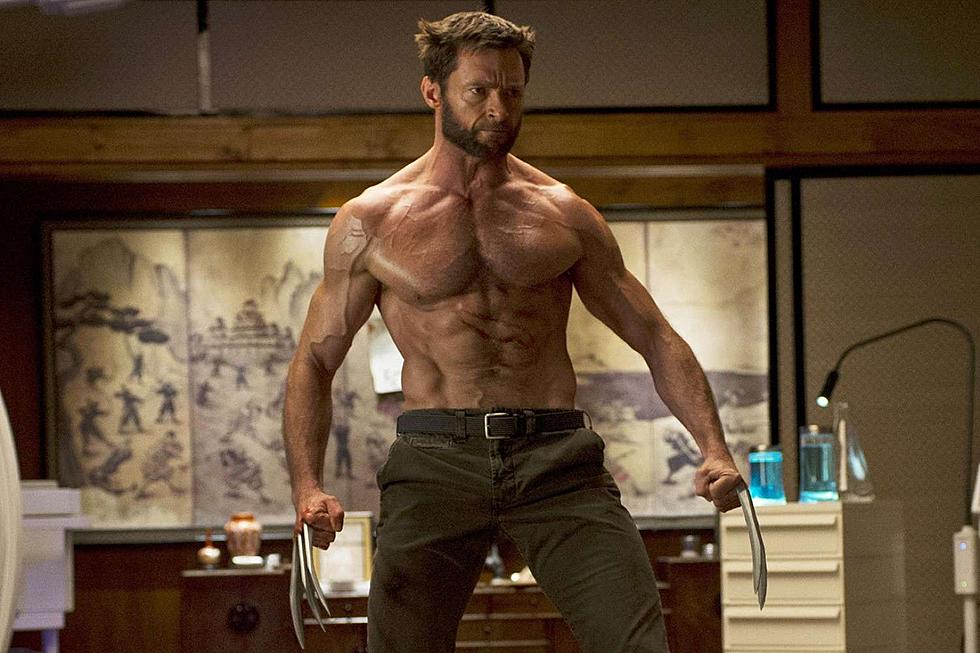
A lot of actors involved in superhero films have all come out and spoken about the extreme diets they have to do in order to get the “superhero physique”. Hugh Jackman who has played Wolverine for years now (despite having supposedly bid farewell to the character with 2017’s ‘Logan’…but that’s neither here nor there) has spoken about how whenever he has a shirtless scene he will go through a dehydration regime where he doesn’t drink water for 36-hours which you don’t need to be a healthcare professional to know is very, very bad for you. Kumail Nanjiani who was in 2021 film ‘Eternals’ has similarly spoken about the extremes he went to to achieve the “ripped” physique he had for the film, even going further as to talk about how much it messed up his relationship to food and he adopted disordered eating habits as a result. It is apparent that this trend of extreme body transformations, as well as being completely unnecessary given that most superhero and action films are VFX nightmares entirely shot in front of blue and green screens, meaning the physiques could simply be added in post-production, promote disordered eating. But because these behaviours lead to a physique which our beauty standards look positively on and the primary target is men, people don’t realise how pathological and dangerous this is.

It’s hard to say whether eating disorders are generally depicted so poorly because of a general lack of knowledge or misunderstanding of exactly what eating disorders are and how dangerous they are, or if people’s general misunderstanding of them is because the media depicting it is so limited or unserious. Given the rising popularity of eating disorder accounts on social media like twitter (I refuse to call by the new one-letter name), it is clear that now more than ever we need to expose the dangers of them to stop young people falling into patterns of disordered eating and thinking that ultimately becomes pathological; but that may require a whole overhaul on the way thinness and fatness are viewed in western society as whole. Shame.
– T

 Small, Silver and Hardback